
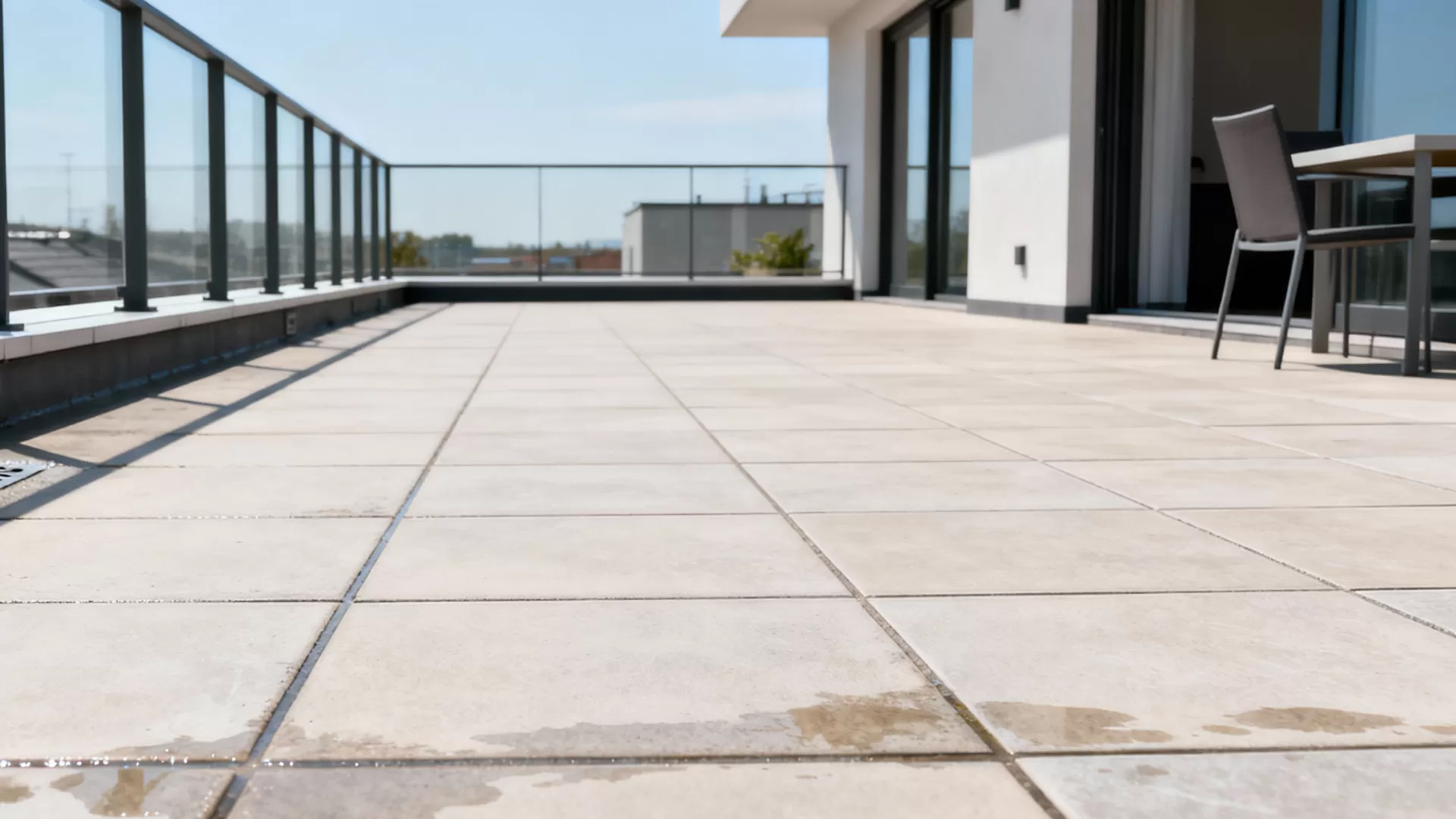
Terrace waterproofing is one of the critical applications that directly affect the structural health of a building. Since outdoor areas are constantly exposed to rain, snow, and UV rays, the risk of water leakage increases over time. This can cause serious damage both to the load-bearing structure and to living spaces. With its expertise and innovative solutions, DryFiX offers a reliable system for those who want to achieve complete waterproofing on terraces.
Why Do Terraces Experience Water Leaks?
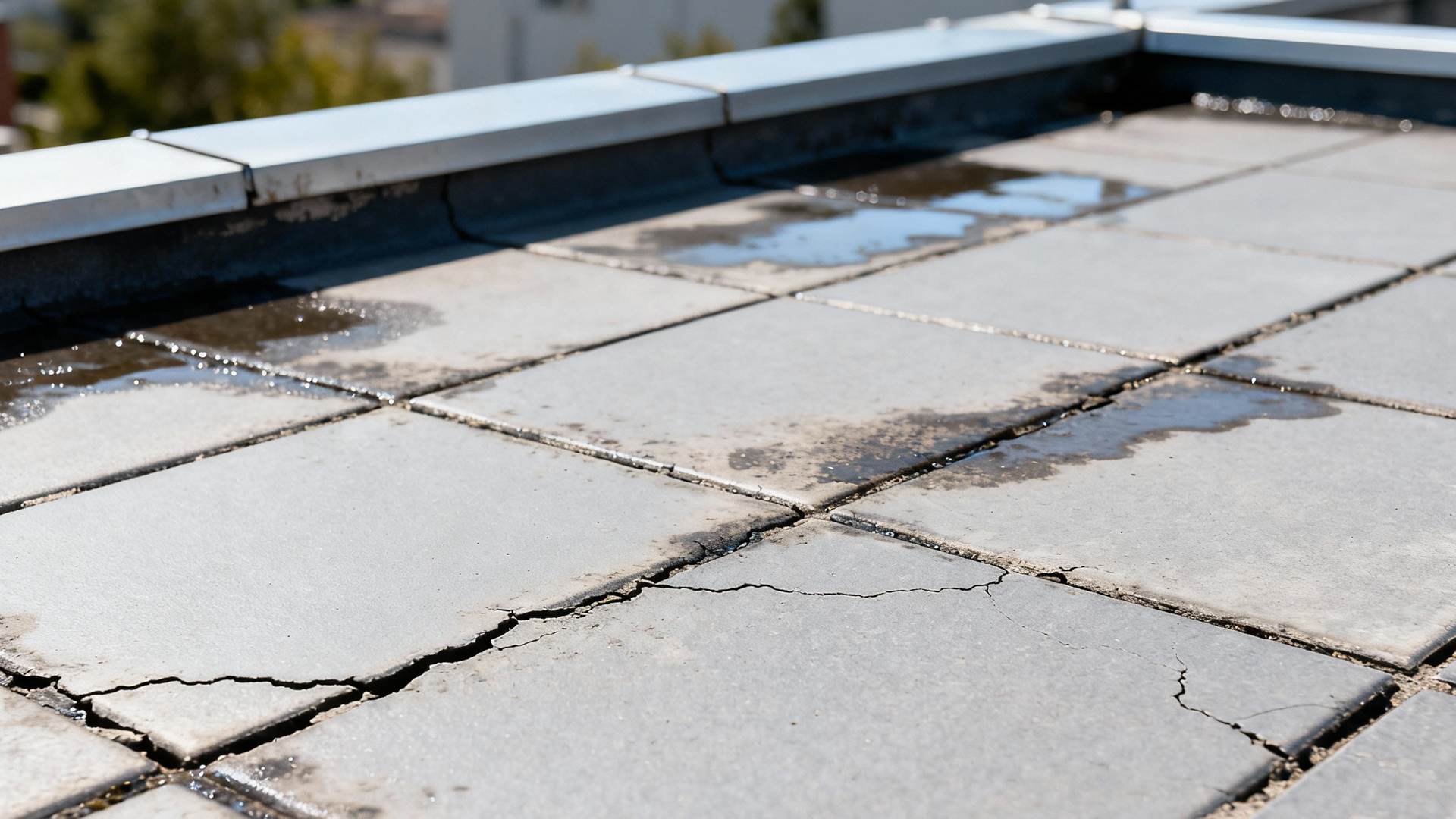
Most terrace water leaks originate from application errors, poor material selection, or environmental impacts. Over time, these leaks may cause interior dampness, paint blistering, and weakening of the concrete. Knowing the causes of leakage is just as important as understanding the answer to the question “How is terrace insulation done?”
Deformation of joint gaps
One of the most common problems in ceramic- or stone-covered terraces is the cracking of joint fillers over time. UV rays and temperature differences cause loosening or splitting in these joints. DryFiX Siloxane 100 is a transparent water-repellent system developed specifically to protect joints without altering the appearance of the surface.
Capillary cracks and concrete movement
Terrace concrete expands and contracts with temperature changes. These movements cause micro-cracks that eventually allow water to penetrate. DryFiX Bitümer 100 2K creates an effective initial barrier with its high crack-bridging capability.
UV-related surface fatigue
Sunlight gradually diminishes the elasticity of terrace waterproofing materials. In low-quality products, poor UV resistance leads to inevitable leakage within a few years. DryFiX terrace waterproofing products with UV resistance ensure long-term durability under outdoor conditions.
Cove and expansion-joint errors
Corners and expansion joints are the most problematic areas in waterproofing. Incorrect material selection or missing band applications allow water to seep inside. DryFiX Elastic Band Systems provide 100% sealing by accommodating movement in these areas.
Why Is Material Selection Critical in Terrace Waterproofing?
Correct terrace waterproofing depends not only on proper application but also on selecting materials suited to the needs of the structure. Since terraces are exposed to both standing water and direct UV rays, products must withstand these conditions. DryFiX offers a wide product range meeting essential criteria such as crack bridging, UV durability, and elasticity.
Creating the Base Waterproofing Layer with Bitümer 100 2K
Among terrace waterproofing materials, DryFiX Bitümer 100 2K stands out for surfaces exposed to high pressure and constant water. Its dual-component structure allows easy application by brush, trowel, or spray. This flexible membrane prevents crack formation and provides high performance in outdoor conditions. For professionals seeking terrace leak solutions, Bitümer 100 2K forms a long-lasting and durable base layer.
Long-Lasting, Elastic Waterproofing with Polyurea CO
For those wanting superior performance, DryFiX Polyurea CO offers a seamless and highly elastic professional solution. It maintains its flexibility between -40°C and +200°C, making it one of the top terrace sealing methods in regions with extreme climates. It also performs perfectly under ceramic and in high-traffic areas.
A Transparent Water-Repellent Shield with Siloxane 100
Developed for users who want a solution without removing existing coverings, DryFiX Siloxane 100 creates an effective water-repellent layer without changing the appearance of the surface. It is ideal for natural stone, granite, or ceramic-covered terraces. Its UV durability ensures long-lasting protection, and it penetrates deeply to reduce surface tension.
GLASSY 100 for Leak-Proofing Without Removing Ceramics
For those who want to preserve aesthetics, DryFiX GLASSY 100 provides a transparent “liquid glass” waterproofing layer. It can be applied without removing ceramics or existing coverings. With its UV resistance and water-repellent properties, it protects the surface effectively while maintaining breathability.
Role of Cove and Expansion Joint Bands on Terraces
One of the most critical answers to the question “Why do terraces leak?” lies in improper corner and expansion-joint treatment. These are the most mobile structural areas and often the weakest point of the insulation system.
- DryFiX Cove Band protects against cracks commonly occurring in corners.
- DryFiX Expansion Band prevents cracking and tearing in expansion joints.
- DryFiX Water-Swelling Band strengthens negative-side waterproofing in cold joints and ensures 100% sealing in concrete connections.
These specialized systems have proven their reliability as crack-bridging terrace solutions backed by user experience.
Application Sequence: Step-by-Step Terrace Waterproofing Guide
The answer to “How is terrace insulation done?” lies in following the correct sequence. Even the best materials can fail if applied incorrectly. DryFiX provides appropriate solutions for every step.
- Surface Repair: Remove all loose material and fill cracks with DryFiX TRACK R2.
- Primer Application: Balance surface absorbency with DryFiX PRIM-A or BINDER 100.
- Band Applications: Use DryFiX Expansion Band, Water-Swelling Band, and Cove Band for corners and joints.
- Waterproofing Product Application: Apply the selected product (Bitümer 100 2K or Polyurea CO) in at least two cross layers.
- Optional Covering: If ceramics will be installed, products like DryFiX SB PLUS should be preferred.
These five steps provide durable and safe waterproofing for any terrace project.
Most Common Application Mistakes and Their Solutions
According to DryFiX site analyses, most failed terrace sealing applications stem from the following mistakes:
- Applying only one coat — minimum two coats are essential.
- Neglecting edge details — lack of band systems increases leak risk up to 70%.
- Applying onto a water-saturated surface — moisture prevents adhesion.
- Choosing the wrong product — ignoring UV resistance, elasticity, and covering compatibility causes early wear and leakage.
DryFiX offers pre-application consultancy and product selection support to prevent these issues.
Professional Tips for Long-Lasting Terrace Waterproofing
- Consider climate conditions: Choose elastic products like DryFiX MS POLYMER 100 for regions with large temperature variations.
- Respect curing time: Allow the product to fully cure based on weather conditions.
- Create a maintenance plan: Periodic checks help detect early deformation.
Frequently Asked Questions
When should terrace waterproofing be done?
During dry, rain-free weather. Spring and summer are ideal.
Can terrace waterproofing be done without removing the covering?
Yes — with transparent products like DryFiX GLASSY 100.
How long after waterproofing can the terrace be used?
It depends on the product. Bitümer 100 2K typically requires 24–48 hours to fully cure.
Which products are suitable for UV-exposed terraces?
DryFiX SB PLUS and Polyurea CO offer exceptional UV resistance and outdoor performance.